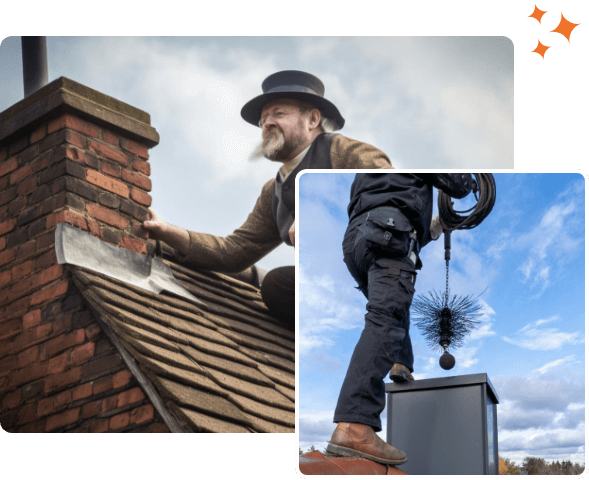
Most people think of chimney cleaning as something that prevents fires. That is true, but it does much more than that. A dirty chimney affects the air quality inside your building in ways you may not connect to the chimney itself. Soot, creosote, carbon monoxide, and allergens can all enter your living or working space through a neglected flue. If you own a home or manage a commercial property in the Boston area, chimney cleaning in Boston is not just about fire safety. It is about the air your family, tenants, or employees breathe every day.
What Builds Up Inside a Chimney Over Time
Every time wood, gas, or oil burns in your fireplace or heating system, byproducts travel up through the flue. Not all of those byproducts make it out. Over time, layers of material coat the inside walls of the chimney and restrict airflow.
The most common buildups include:
- Creosote: A sticky, tar-like substance produced by wood burning. It hardens over time and narrows the flue opening.
- Soot: Fine black particles that settle on the chimney walls and can flake off into the firebox and the room.
- Ash and debris: Leaves, animal nests, and other materials that enter from the top and block the draft.
- Moisture residue: Condensation inside the flue creates damp spots where mold and mildew can grow.
All of this material sits inside the chimney and interacts with the air that moves through your building’s ventilation path.
The Link Between a Dirty Chimney and Poor Air Quality
Backdrafting and Smoke Spillage
When creosote and debris narrow the flue, the chimney cannot pull smoke and gases upward the way it should. This creates a condition called backdrafting, where smoke and combustion gases reverse direction and enter the room instead of exiting through the top of the chimney. You will notice this as a haze in the room, a burning smell, or irritation in the eyes and throat when the fireplace or heating system runs.
For commercial spaces like restaurants with wood-burning ovens or event venues with fireplaces, backdrafting affects everyone in the building and can trigger complaints from customers and staff.
Carbon Monoxide Exposure
Carbon monoxide is a colorless, odorless gas produced during combustion. A clean chimney with proper draft pulls CO out of the building. A blocked or dirty chimney traps it inside. According to the Centers for Disease Control and Prevention, over 400 people die in the United States each year from accidental carbon monoxide poisoning not linked to fires, and thousands more visit emergency rooms for exposure symptoms.
Scheduling regular chimney cleaning in Boston removes the blockages that cause CO to accumulate indoors. This applies to both wood-burning and gas-burning systems, since gas appliances also produce carbon monoxide during operation.
Mold and Moisture Problems
Chimneys without proper caps or with cracked liners allow rain and snow to enter the flue. In Boston, where precipitation is frequent and winters are wet, moisture buildup inside the chimney creates the conditions for mold growth. Mold spores travel from the chimney into the living or working space through the firebox opening and can spread into the HVAC system if the fireplace shares ductwork or sits near a return vent.
For commercial buildings with multiple floors, mold in the chimney system can affect air quality on every level.
How a Clean Chimney Improves the Air You Breathe
Once the creosote, soot, and blockages are removed, the chimney can do what it was built to do: pull combustion gases, smoke, and moisture out of the building. The draft returns to full strength, and the air inside the building stays cleaner.
After a proper chimney cleaning in Boston, you will notice:
- No smoky or musty smell coming from the fireplace area
- Fires that burn cleaner with less smoke entering the room
- Reduced dust and soot particles settling on furniture and surfaces near the fireplace
- Lower risk of carbon monoxide buildup during heating season
- Better performance from your HVAC system if the chimney and heating system are connected
Commercial Properties Face Higher Air Quality Standards
Office buildings, hotels, restaurants, and healthcare facilities in Boston must meet indoor air quality standards that are stricter than residential requirements. A neglected chimney in a commercial property creates a compliance risk on top of the health risk. Building inspectors and health departments can flag poor air quality during routine visits, and tenants have the right to report it.
For property managers overseeing older Boston buildings where fireplaces and chimneys are part of the original construction, annual cleaning is a baseline requirement to keep the air quality within acceptable limits.
How Often Should You Clean Your Chimney for Air Quality?
The National Fire Protection Association recommends annual chimney inspections and cleaning. For properties that use the fireplace or wood-burning system on a regular basis during Boston’s winter season, cleaning once a year before the heating season is the standard approach. Commercial kitchens with wood-fired equipment may need service two or three times per year, depending on volume.
How Affordable Duct Cleaners Can Help
Affordable Duct Cleaners provides chimney cleaning in Boston for residential homes, commercial buildings, restaurants, and multi-unit properties. Our team removes creosote, soot, debris, and blockages from the full length of the flue and provides a condition report after every service. We work around your schedule and handle the job without disrupting your business operations or daily routine.
If that chimney has not been cleaned in over a year, every breath carries what is sitting inside those walls. Call us today and clear it out before the next heating season puts your indoor air quality at risk.