
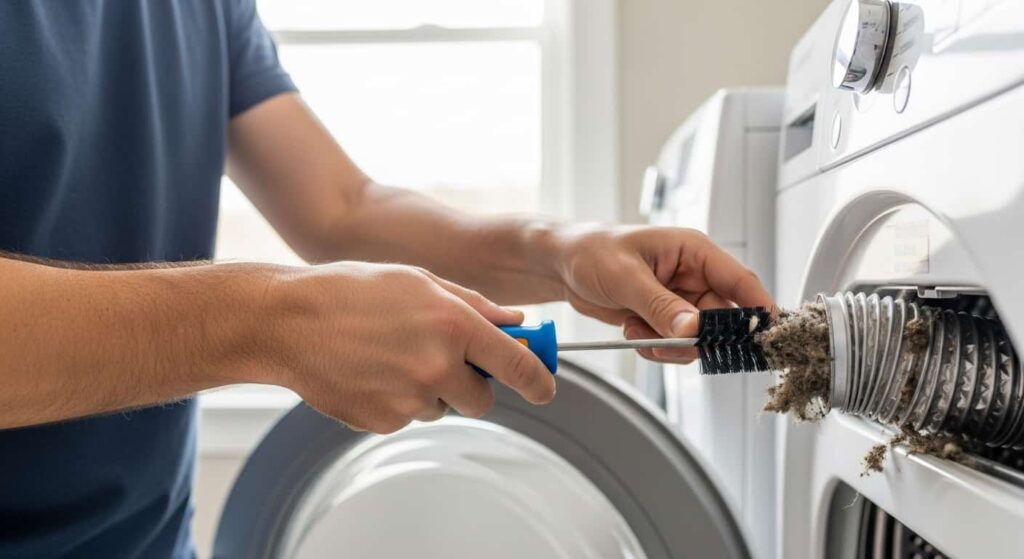
Why Is My Dryer Taking Too Long to Dry Clothes?
A dryer that once finished a load in one cycle may gradually start needing another 20 minutes, then a second full cycle. Clothes may come out warm but damp, towels may take much longer than lighter fabrics, or the laundry room may feel hotter than it used to.
When a dryer takes too long to dry, restricted airflow is one of the first problems worth checking. A clogged lint screen, lint buildup inside the exhaust duct, a crushed vent hose, or a blocked exterior outlet can keep warm, moisture-filled air trapped in the system. In those situations, dryer vent cleaning may restore airflow, but slow drying can also come from oversized loads, washer problems, heating faults, or incorrect dryer settings.
The way the dryer behaves can help narrow down the cause before parts are replaced unnecessarily.
How a Dryer Removes Moisture From Clothes
A conventional vented dryer does more than heat clothing. Heated air passes through the drum, absorbs moisture from the fabrics, and then carries that moisture through the exhaust duct to the outdoors.
That last step matters as much as the heat. If humid air cannot leave the machine, fresh heated air cannot move through the load as effectively.
ENERGY STAR explains that conventional vented dryers release warm, humid air through a vent to the exterior. It also notes that clothing needs enough room inside the drum to tumble so hot air can circulate through the load.
Heat Without Airflow Is Not Enough
This explains a common symptom: the dryer feels hot, but the clothing remains damp.
The heating system may still be producing heat. The problem is that moisture is not leaving efficiently.
If this happens repeatedly, inspect the airflow before assuming the heating element has failed.
A Clogged Dryer Vent Is a Common Cause of Long Drying Times
Lint does not stay entirely inside the lint screen. Fine fibers can pass into the exhaust system and settle along the duct over time.
As the opening inside the duct becomes narrower, airflow drops. The dryer then needs more time to remove the same amount of moisture.
The U.S. Fire Administration specifically recommends having the dryer venting system serviced and cleaned when clothes begin taking longer than normal to dry. It also advises checking for damaged, crushed, or restricted venting.
What Happens When Airflow Becomes Restricted?
A restricted vent creates a chain of problems:
- Moist air leaves the drum more slowly.
- Clothes remain damp for longer.
- The dryer extends the cycle or requires another cycle.
- Heat remains around the appliance and exhaust system.
- The motor, blower, and heating components operate for more time.
- Energy use increases because the dryer is running longer.
That is why dryer vent cleaning affects more than lint removal. It can affect how efficiently the dryer completes its normal drying cycle.
Clues That the Vent May Be the Problem
Slow drying becomes more suspicious when it appears together with other airflow symptoms.
Look for:
- Clothes taking more than one normal cycle
- Towels or jeans remaining damp
- Clothes feeling unusually hot
- The dryer cabinet becoming hotter than before
- Excess heat in the laundry room
- Weak airflow at the exterior vent
- A burning or overheated smell
- Lint collecting around the outside vent opening
- The exterior vent flap barely opening while the dryer runs
USFA guidance recommends checking that the outdoor vent covering opens when the dryer is operating.
Cleaning the Lint Screen Does Not Clean the Whole Vent
Cleaning the lint screen before or after each cycle is important, but it only addresses lint near the appliance.
The exhaust duct may travel through a wall, ceiling, basement, crawl space, or several turns before reaching the outside. Lint can collect throughout that path even when the lint screen is cleaned consistently.
USFA recommends cleaning the lint filter with each cycle and periodically servicing the dryer’s interior and venting system.
Check the Lint Screen First
Before assuming there is a deeper blockage:
- Remove the screen.
- Clear visible lint.
- Inspect the screen for damage.
- Make sure it fits correctly.
- Look for heavy residue that may interfere with airflow.
If the screen is clear but drying time continues to increase, the restriction may be farther into the exhaust system.
Also Read:Best Time of Year to Clean Air Ducts
The Vent Hose Behind the Dryer May Be Crushed
Sometimes the problem is only a few inches behind the machine.
A flexible transition duct can become flattened when the dryer is pushed too close to the wall. A sharp bend can also restrict airflow even if there is little lint inside it.
USFA advises homeowners to inspect venting behind the dryer and confirm that it is not crushed, damaged, or restricted.
Inspect the Connection Without Damaging It
Look behind the dryer for:
- Flattened ductwork
- Sharp bends
- Disconnected sections
- Tears or holes
- Heavy lint around connections
- A dryer pushed directly against the hose
A damaged duct may need repair or replacement rather than cleaning alone.
The Exterior Dryer Vent Can Block Airflow Too
The exhaust path ends outside, and a blockage there can affect the entire system.
Lint may collect around the exterior hood. The damper can become stuck, or outdoor debris and animal nesting material may obstruct the opening.
USFA recommends making sure the exterior damper opens during dryer operation and checking periodically for nests or other blockages.
A Simple Airflow Check
With the dryer operating normally, look at the exterior outlet.
The vent flap should open, and you should notice exhaust airflow. Very weak movement can point to a restriction somewhere between the dryer and the outside termination.
Avoid reaching into operating equipment or disassembling ductwork if access is unsafe.
Your Laundry Load May Simply Be Too Large
Not every slow cycle means the vent is clogged.
An overloaded dryer has difficulty moving warm air through clothing because the items cannot tumble freely.
ENERGY STAR notes that an oversized load takes longer to dry because sufficient drum space is needed for tumbling and hot-air circulation.
Try One Smaller Load
If the dryer performs normally with a smaller load but struggles with packed loads, capacity may be the main issue.
Heavy items also behave differently from lightweight clothing. Towels, blankets, jeans, and bedding retain more moisture and can need more time even when the dryer is working properly.
Do not judge dryer performance based on one unusually heavy load.
The Washer May Be Sending Clothes to the Dryer Too Wet
Drying time starts before clothing reaches the dryer.
The washer’s final spin cycle removes a large amount of water from the load. If clothes leave the washing machine unusually wet, the dryer has more moisture to remove.
Check the Clothes After the Washer Finishes
They should feel damp, not saturated.
If clothing is dripping or noticeably wetter than usual, investigate:
- Incorrect washer cycle
- An unbalanced load
- Reduced spin performance
- Washer drainage problems
- Heavy items preventing a proper final spin
Running the dryer longer may hide the washer problem without solving it.
Dryer Settings Can Add More Time Than Expected
Modern dryers may offer automatic moisture sensing, low-temperature settings, delicate cycles, eco modes, timed drying, and other options.
The selected cycle affects how much heat is used and how the dryer decides when to stop.
Before Requesting a Repair, Check:
- Heat setting
- Load type
- Automatic vs timed cycle
- Delicate or low-temperature mode
- Eco settings
- Moisture-sensor selection
A low-temperature cycle can take longer without anything being wrong.
Compare performance using the normal setting recommended for the fabrics being dried.
A Heating Problem Can Also Make the Dryer Run Too Long
Restricted airflow often produces clothing that is hot but still damp.
A heating failure can produce a different pattern: the drum turns normally, but clothing remains cool or only slightly warm.
Possible appliance problems can involve:
- Heating element
- Gas burner system
- Igniter
- Thermostat
- Thermal fuse
- Temperature sensor
- Electrical supply
These problems usually require appliance diagnosis rather than vent cleaning alone.
Use the Temperature of the Clothes as a Clue
- Hot but damp clothes: airflow deserves close attention.
- Cool and damp clothes: heating may be the larger problem.
- Normal heat but very large load: load size may be extending the cycle.
These observations are not a complete diagnosis, but they can help point the investigation in the right direction.
Long Dryer Vent Runs Can Make Restrictions More Noticeable
Some dryers sit directly against an exterior wall and have a short exhaust path.
Others may vent several feet through walls, ceilings, or floors before reaching outside. Longer systems can include several turns, giving lint more places to collect and adding resistance to airflow.
The route matters because two identical dryers can perform differently when their exhaust systems are very different.
Pay Extra Attention When the Vent:
- Travels a long distance
- Contains several bends
- Runs upward through multiple levels
- Exits through a roof
- Serves a dryer far from an exterior wall
- Has not been inspected for a long period
A longer or more complicated route may make professional inspection and cleaning more useful because much of the duct cannot be checked from either end.
Slow Drying Can Increase Energy Use
A dryer that operates longer uses energy for longer.
If one load should finish in one cycle but regularly requires a second cycle, the machine is spending extra time powering the drum, blower, controls, and heating system.
ENERGY STAR notes that dryer efficiency reflects the energy required during operation and that consumers with high dryer use can have significant ongoing energy costs.
The easiest way to reduce unnecessary dryer operating time is to solve the reason moisture is taking too long to leave.
A Blocked Vent Is Also a Fire-Safety Concern
Long drying time is not the most serious issue associated with lint buildup.
Lint can burn.
USFA warns that failing to clean lint filters and dryer vents increases clothes-dryer fire risk. Its dryer safety guidance recommends maintaining the vent, checking for restrictions, and keeping the area around the dryer clear of combustible materials.
That means increasing drying time should not simply become the new normal.
If the dryer is also overheating, producing unusual smells, or showing obvious airflow problems, stop treating the issue as an inconvenience and investigate the exhaust system.
When Does Dryer Vent Cleaning Make Sense?
Dryer vent cleaning becomes a reasonable next step when slow drying is accompanied by evidence of poor exhaust airflow or when the system has accumulated lint that cannot be reached through routine lint-screen cleaning.
Consider Having the Vent Checked When:
- A normal load regularly needs a second cycle.
- Drying time has gradually increased.
- Clothes are very hot but still damp.
- Exterior airflow feels weak.
- The outside damper barely opens.
- Visible lint has collected around the termination.
- The vent route is long or difficult to access.
- The dryer or laundry room becomes unusually hot.
- The transition duct is crushed or damaged.
- The vent has not been inspected for an extended period.
USFA specifically recommends periodic dryer and vent servicing, especially when clothes begin taking longer than normal to dry.
Check the Simple Causes Before Replacing the Dryer
When a dryer takes too long to dry, replacing the appliance should not be the first response. The dryer may still be producing heat and turning normally while restricted exhaust airflow prevents it from removing moisture efficiently.
Start with the lint screen, load size, washer spin, settings, vent hose, exterior outlet, and overall airflow. If those checks point toward lint buildup or a restriction deeper in the exhaust system, dryer vent cleaning can address the vent instead of treating a ventilation problem as an appliance failure.
Affordable Duct Cleaners can be contacted when professional dryer vent cleaning is needed and the vent cannot be safely or completely cleared through normal homeowner maintenance.